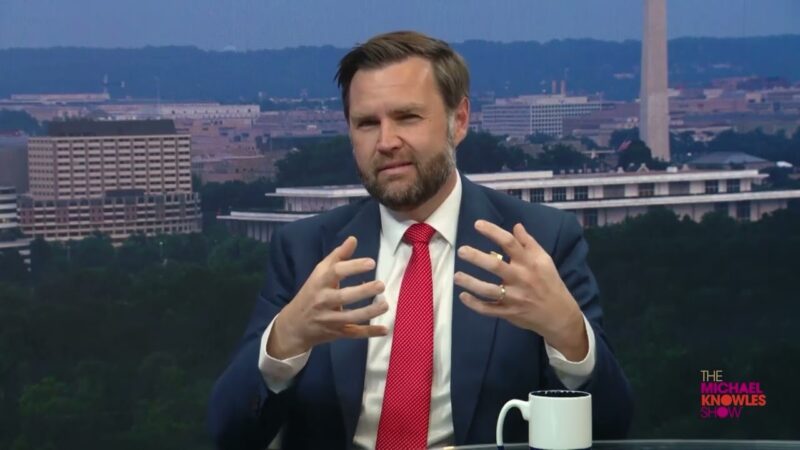
Vice President (VP) of the United States, JD Vance, has stated that the Trump administration is using the recently signed Islamabad Memorandum of Understanding (MoU) to stabilize the global energy market and assess future diplomatic options with Iran.
Speaking on The Michael Knowles Show, Vance explained the strategic rationale behind the administration’s approach to the Middle East, noting that the policy centers on creating room for economic and diplomatic maneuvering.
“One of the things that I think is underappreciated about the president’s approach to this whole region of the world is he likes to reshuffle the deck and then see where the leverage points are, where the pressure points are and see where we can make progress,” Vance said.
The administration is focusing on the status of the Strait of Hormuz and energy logistics as key operational components of the framework.
Vance confirmed that oil traffic through the vital maritime corridor is moving steadily, with daily volumes on certain days exceeding levels recorded before the outbreak of the conflict, leading to a subsequent drop in global oil prices.
Vance explained that the administration is utilizing the stabilization period to build up energy reserves while keeping structural options open.
“So, I think what the president has told us to do is use this MoU to sort of refill the world’s oil economy to refill some stocks and then to see where the hand is,” Vance stated.
He added that the current phase allows the administration to evaluate its next steps without the immediate constraints of an energy crisis. “But what’s happening right now is he’s letting those options play out in an environment where there is significantly less pressure on the world energy economy,” he noted.
Regarding long-term diplomatic relations with Tehran, Vance stated that any permanent shift in the bilateral relationship remains conditional on verifiable compliance from the Iranian government.
“If the Iranians are willing to make the commitments that we would like them to make and are willing to back those up with verifiable milestones, then we are going to change our relationship with Iran,” Vance stressed.
According to Vance, the US strategy currently hinges on two distinct pathways moving forward. The administration will either pursue a comprehensive, long-term agreement that demands a fundamental alteration in Iranian policy, or it will choose to “bank our wins” by maintaining its current military and economic posture in the region.
The Islamabad MoU, signed on June 17, 2026, serves as the primary mechanism for the diplomatic developments.