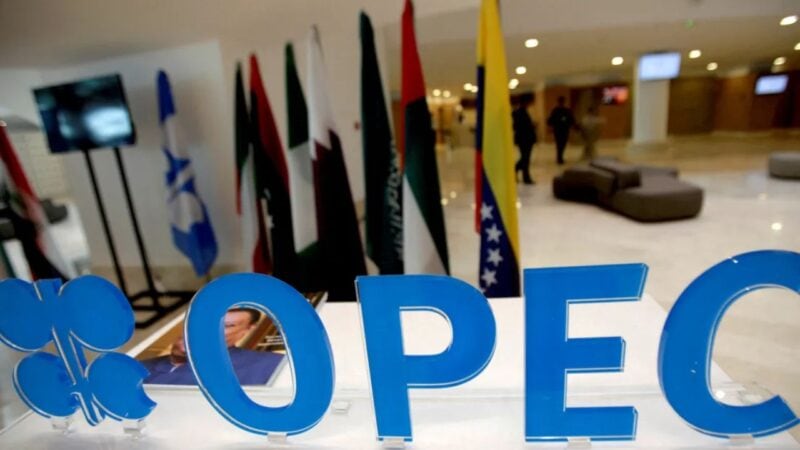
The United Arab Emirates’ (UAE) decision to leave OPEC (Organization of the Petroleum Exporting Countries) after nearly 60 years has triggered multiple reactions online, with many calling it a major shift in global energy politics and questioning what it means for oil prices and regional power dynamics.
The UAE, OPEC’s third-largest oil producer, announced that it will leave the group, saying that the decision will allow it greater flexibility to respond to what it called a “new energy age” and align with its “long-term strategic and economic vision”.
Reports suggest that the move follows years of disagreement with Saudi Arabia over production quotas. While Saudi Arabia has supported output cuts to keep prices stable, the UAE has reportedly pushed for higher production to support its economic plans and energy transition goals.
Saudi ministers have favoured curbs on oil production to help support the oil market after it recorded three consecutive years of annual losses before the crisis. However, the UAE is understood to have become frustrated with the limits and is expected to pump more oil in the short term to help fund its plans for a low-carbon future.
The timing of the exit has added to concerns as the region faces rising tensions linked to the US-Israeli war on Iran and disruptions around the Strait of Hormuz, a key route for global oil shipments.
Reacting to the development, one user wrote, “OPEC has survived wars, price crashes, and internal feuds for 65 years. The Iran war may be doing more structural damage to the cartel than all of them combined”.
Another said, “The UAE wants more oil on the market. Saudi wants less. That tension breaks the system. For years, OPEC set global energy prices. Now its own members are starting to ignore the rules. When coordination cracks, prices don’t just move. Power does”.
A third user called it “a serious development,” adding that the decision has “the potential of disrupting global oil supply and pricing”.
One reaction linked the move directly to regional tensions, stating, “UAE’s exit is quota frustration, yes but the timing hands Iran decisive Hormuz leverage. They ditch coordination to chase max barrels for the highest bidder, fracturing the cartel and exposing Abu Dhabi while Iran controls the choke point”.
Another user wrote, “In the short term, the move is adding to uncertainty and volatility amid the ongoing Hormuz tensions. In the long term, leaving gives the UAE full freedom to align output directly with market demand and maximize revenue on their own terms”.
OPEC was formed in 1960 by Saudi Arabia, Iran, Iraq, Kuwait and Venezuela to coordinate oil production policies among member states and influence global oil prices.
Over the years, the group expanded to include major oil-producing countries, with the UAE joining in 1967 through Abu Dhabi before remaining a member after the federation was formed in 1971.
The group controls around 80 percent of the world’s proven oil reserves and has long used production limits to manage supply and keep prices at levels that support oil-dependent economies. In recent years, OPEC also worked closely with non-member producers including Russia under the wider OPEC+ alliance.