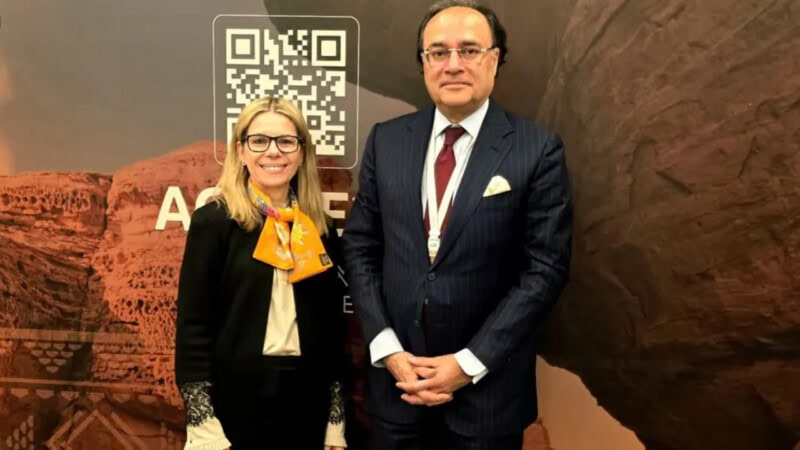
The World Bank on Sunday reaffirmed its commitment to Pakistan’s $20 billion development programme, signalling continued backing for the country’s reform and development agenda.
The assurance was conveyed during a meeting between Finance Minister Muhammad Aurangzeb and World Bank Group Managing Director Anna Bjerde on the sidelines of the AlUla Conference for Emerging Market Economies in Saudi Arabia.
According to officials, the meeting included a review of progress under Pakistan’s Country Partnership Framework (CPF) and followed up on the recent visit of the World Bank president to Pakistan. The discussions covered a range of priority areas identified under the framework, including energy, education, health, climate resilience, infrastructure, fiscal reforms and debt-for-development swaps.
Both sides highlighted the importance of adopting a more focused approach to programme execution, stressing the need for clear performance benchmarks and strong implementation mechanisms to ensure timely and measurable outcomes.
During the meeting, Bjerde reaffirmed the World Bank Group’s commitment to Pakistan’s 10-year development programme valued at $20 billion. Aurangzeb reiterated Pakistan’s resolve to work closely with the World Bank, including through engagement with provincial governments to improve coordination and delivery under the framework.
The World Bank Board approved the $20 billion financing package for Pakistan last year, covering the period from 2025 to 2035. The Country Partnership Framework was formally released following approval by the World Bank Group’s Board of Executive Directors.
The programme aims to address learning poverty, improve health outcomes for disadvantaged populations and strengthen protection against climate-related risks. The framework outlines investments and reforms across multiple sectors identified as critical to Pakistan’s development objectives.
Ahead of the plan’s approval, the World Bank projected Pakistan’s economic growth at 3.8 percent by 2029. It also projected a fiscal deficit equivalent to six percent of gross domestic product and a debt-to-GDP ratio of 73 percent which were cited as benchmarks for assessing economic performance during the programme period.