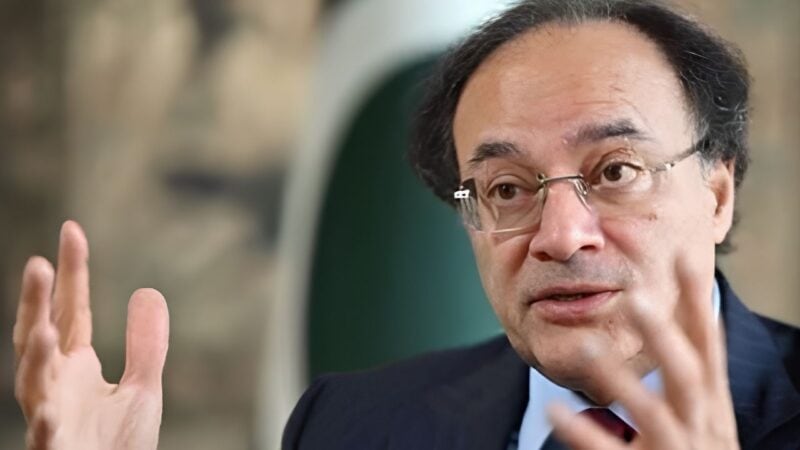
Finance Minister Muhammad Aurangzeb has called for a simpler tax return form for salaried taxpayers, questioning the need for the lengthy process currently in place.
Speaking at the Federal Board of Revenue (FBR) headquarters during the launch of a mobile application for the Fixed Tax Asaan Scheme, Aurangzeb said on Wednesday that the existing form was too difficult to complete.
“I do not see any logic for this complicated form,” he said, adding that even an MBA graduate would struggle to fill it.
The minister pointed out that around 70 percent of salaried income is deposited directly into bank accounts after tax deductions, leaving limited room for additional income sources that would require such a detailed filing process.
The government also launched the “Asaan Tajir” app to allow small traders and shopkeepers to register under the Fixed Tax Asaan Scheme and file their returns digitally.
The app has a simplified form in Urdu and is available on the Google Play Store. During registration, users will receive a Payment Slip Identification Number (PSID) through which they can pay their tax.
Once the payment is made, users will receive confirmation of their registration, updated filer status and details about the benefits available under the scheme.
Minister of State for Finance Bilal Azhar said that the app would be launched on Apple’s App Store in the coming days. Versions in Pashto, Balochi and Sindhi are also expected to be introduced by the first week of September.
He said that traders needing assistance could contact designated focal offices and officials at Regional Tax Offices in their respective districts.
Azhar also displayed a green identification plate with security features that will be issued to traders registered under the scheme.
Traders who register by the tax-filing deadline will receive the plate free of cost, while its price is expected to remain below Rs1,500 afterwards.
FBR Chairman Rashid Mahmood Langrial said that the plate would identify bona fide registered shopkeepers and prevent FBR officers from entering their shops for routine tax-related matters.
He expressed hope that the scheme would receive a strong response in terms of registrations and revenue collection.
The scheme was announced before the federal budget on June 5, following which the government began work on the application and identification plates.
Aurangzeb also told reporters that Pakistan had formally requested a United States (US) Exchange Stabilisation Support Facility (ESF) as part of efforts to support the rupee, strengthen foreign exchange reserves and reduce dependence on repeated loan rollovers.
He said that discussions with the US were going on and Pakistan expected a response from the US Treasury or US Exim Bank by the end of September 2026.
The request, reportedly worth $10 billion, is intended mainly to signal confidence in Pakistan’s currency and external-sector stability rather than function as a conventional loan.
Aurangzeb remarked that Pakistan was also looking to extend debt maturities to five, seven and 10 years to reduce its reliance on repeated bilateral loan rollovers.
The government is exploring options to extend the maturity of existing bilateral loans for up to 10 years, he added.