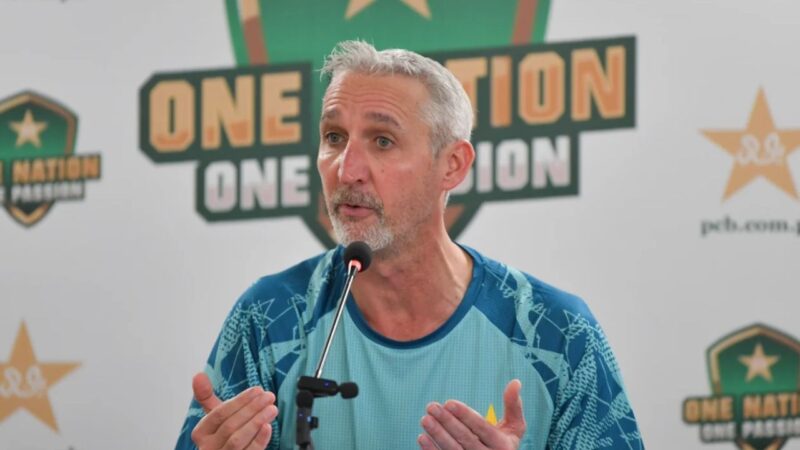
Former Pakistan head coach Jason Gillespie has opened up about his turbulent eight months in charge of the team, saying that he refused to compromise on his principles even as tensions with Aaqib Javed, the chairman of selectors, kept growing.
Gillespie took over as Pakistan’s Test head coach in April 2024 and resigned in December that year. He says the Pakistan Cricket Board (PCB) still owes him money from his contract, but he stood by his decision to walk away rather than stay silent.
“The PCB still owes me thousands of dollars, but I was never going to be a yes man,” he said. “I wasn’t going to compromise on my principles, I never have throughout my career and I certainly wasn’t going to change.”
Gillespie explained that the role changed dramatically once Javed stepped into his position. He had originally joined with a plan to revive Pakistan’s fast bowling tradition and prepare pitches suited to pace bowlers. That plan shifted once Javed took charge.
“The appointment of Javed fundamentally altered the landscape,” Gillespie said. “From that moment, my relationship with Pakistan cricket completely changed.”
He described losing control over selection and team matters soon after. “I went from looking after the Test side, managing that and looking after the players and the staff and having a role in selection to then absolutely no role in anything,” he stated.
Gillespie also spoke about the personal toll of the experience, admitting it left him doubting his coaching career altogether. He said he felt disrespected and undermined by Javed throughout his tenure and claimed Javed worked against him behind the scenes. He said he would consider legal action if the criticism continued.
Looking ahead, Gillespie offered advice to Mike Hesson, who has stepped in from the white-ball setup to coach the Test side for the match at Edgbaston. He urged Hesson to trust his own judgment rather than fall in line with pressure from above.
Gillespie believes Pakistan cricket remains stuck in a difficult cycle as long as the current leadership structure stays in place.
He called for the board to hand full control to a strong head coach and allow him time to rebuild the team without constant interference from selectors or board officials.