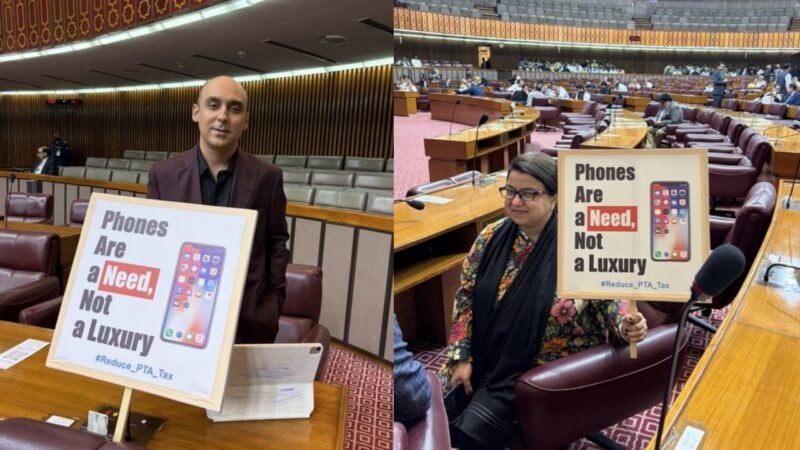
Member of National Assembly (MNA) Syed Ali Kasim Gillani and Minister of State for IT and Telecommunication Shaza Fatima Khawaja held up banners inside the National Assembly demanding a reduction in mobile phone taxes.
Gillani shared images on X, formerly Twitter, displaying banners with the text “Phones are a need not a luxury #reduce PTA tax”. He stated this is part of a campaign against the current tax regime, which has turned mobile devices into luxury products rather than tools required for education, business, and daily communication.
The demonstration follows recent developments in the lower house regarding mobile device taxation. The National Assembly’s Finance Committee unanimously recommended that the federal government and the Finance Ministry reduce the mobile phone tax by 50 percent.
Lawmakers stated that the high tax rates have affected the affordability of devices and slowed down digital growth across the country.
“The National Assembly’s Finance Committee has unanimously recommended that the PTA tax being charged on mobile phones be halved,” Gillani said in a video statement. He thanked Committee Chairman Naveed Qamar and the committee members for their discussions on the matter.
The levy, colloquially referred to as the “PTA tax,” consists of customs duties, sales tax, and regulatory fees imposed by the FBR to register devices on local networks.
The PTA does not set or collect the tax, and the total registration cost varies depending on the specific model and value of the smartphone.
The state originally introduced these regulatory measures to stop the smuggling of mobile devices and to enforce import duty compliance.
Supporters of the current policy maintain that the fees help formalise the smartphone industry and generate revenue for the national treasury.
However, opponents argue that the high cost places a heavy financial burden on citizens who depend on smartphones for learning, work, and connectivity. The ongoing debate links the tax policy directly to broader issues of digital inclusion, technological progress, and the pace of global connectivity inside Pakistan.