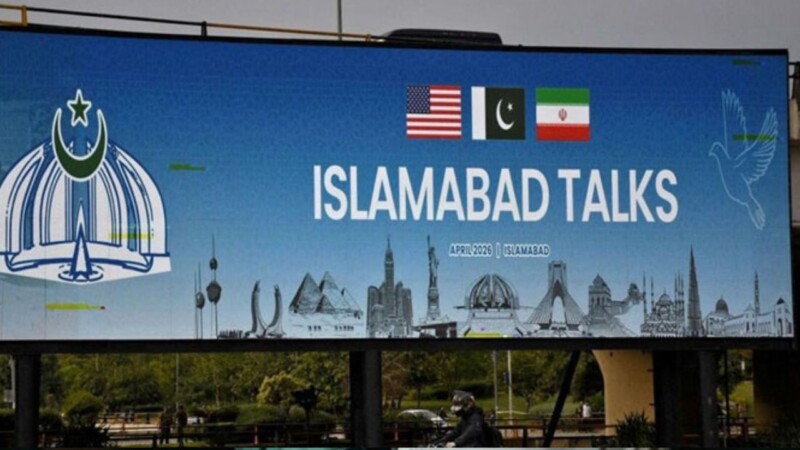
Fresh talks between Iranian and American negotiators are expected to take place in Islamabad on Monday, with Iranian officials saying that delegations are likely to arrive in Pakistan on Sunday, according to an International media outlet.
Pakistan has been pushing to host another round of negotiations after the initial Islamabad talks marked the highest-level engagement between Tehran and Washington DC since 1979.
Although the earlier meetings ended without a formal breakthrough, both sides left the door open for continued dialogue.
International media outlets reported that negotiating teams from the United States (US) and Iran could return to Islamabad this week to resume discussions, while Pakistani officials have also stepped up security measures in the federal capital ahead of the expected meetings.
The first round of talks, held earlier this month at Islamabad’s Serena Hotel, stretched for nearly 21 hours and included direct and indirect discussions between the delegations, with Pakistan acting as mediator. US Vice President JD Vance led the American side, while Iranian Foreign Minister Abbas Araghchi represented Tehran.
Speaking after the earlier talks, Vance said, “The bad news is that we have not reached an agreement. I think that is bad news for Iran much more than it’s bad news for the USA”.
He added, “Whatever shortcomings in the negotiation, it wasn’t because of the Pakistanis who did an amazing job and really tried to help us and Iranians bridge the gap and get to a deal”.
The main sticking points remain Iran’s nuclear programme and maritime security in the Strait of Hormuz.
Washington DC is seeking long-term commitments on uranium enrichment limits, safeguards against weaponisation, and unrestricted commercial navigation through the Strait of Hormuz, one of the world’s most critical oil shipping routes.
Iran, however, is demanding recognition of what it calls its sovereign rights under international law, comprehensive sanctions relief, and guarantees before making any irreversible commitments.
Iranian Foreign Minister Abbas Araghchi said on Friday that the strategic waterway was “completely open” for commercial vessels following the ceasefire between Israel and Lebanon that took effect a day earlier.
US President Donald Trump also stated that the Strait of Hormuz remains open for international shipping, easing concerns over a possible blockade.
Pakistani officials have described the country’s role as focused on keeping both sides engaged rather than forcing an immediate deal. Prime Minister (PM) Shehbaz Sharif earlier said that “full efforts are underway” to resolve the remaining issues and prevent the collapse of diplomacy.